The Truth About Headless Commerce: SFCC vs. Shopify
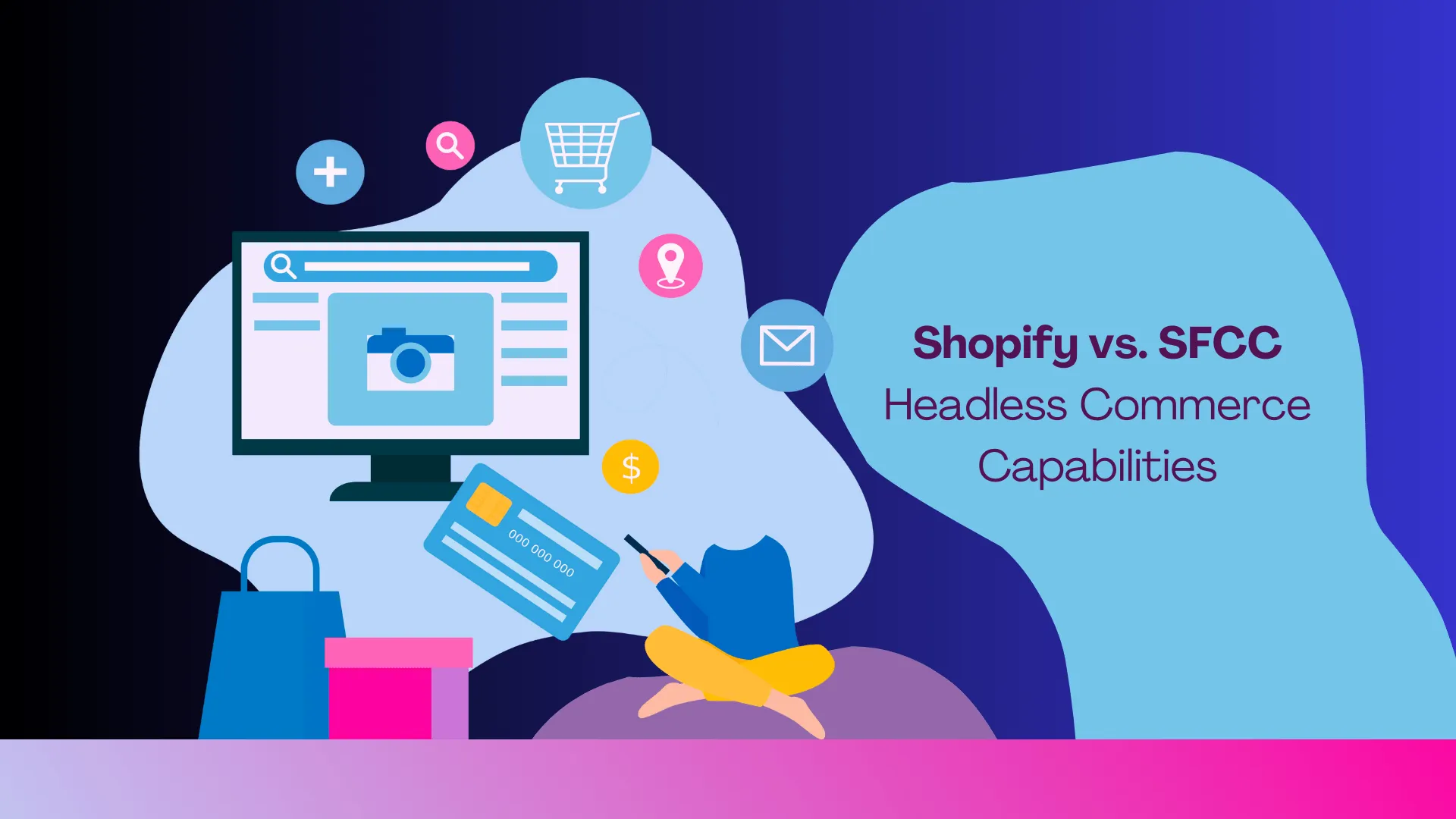
The future of eCommerce isn’t about templates and rigid storefronts—it’s about flexibility, innovation, and seamless customer experiences. Headless commerce is leading this transformation, allowing brands to break free from traditional limitations.
As brands seek greater control over their digital experiences, Shopify and Salesforce Commerce Cloud (SFCC) are evolving their headless capabilities. But which platform truly delivers the flexibility enterprises need?
This article compares Shopify and SFCC’s approach to headless commerce, helping businesses determine which is the right fit for their long-term strategy.
The Challenge: Why Traditional E-Commerce Falls Short
💢 Key Pain Points:
- Limited Customization: Pre-built themes and rigid templates restrict brand differentiation.
- Performance Bottlenecks: Monolithic platforms often struggle with speed and scalability.
- Omnichannel Complexity: Managing multiple touchpoints (web, mobile, IoT) within a traditional platform is challenging.
Shopify vs. SFCC: Headless Commerce Capabilities
| FEATURE | Shopify (Hydrogen & Oxygen) | SFCC (API-First Approach) |
|---|---|---|
| Headless Readiness | Hydrogen (frontend) + Oxygen (hosting) | Fully API-driven, flexible architecture |
| Customization | Good, but dependent on Shopify’s ecosystem | Enterprise-level flexibility with deep integrations |
| Performance Optimization | Edge hosting with Oxygen, but limited CDN control | Advanced CDN + performance management |
| Omnichannel Capabilities | Strong, but relies on third-party tools | Native omnichannel features built-in |
| Integration Flexibility | App-based integrations | Deep, API-first third-party integrations |
Why Headless Commerce Matters for Enterprises
🎯 Benefits:
- Speed & Performance: Decoupling frontend and backend enables lightning-fast experiences.
- Omnichannel Expansion: Sell seamlessly across mobile apps, marketplaces, and in-store digital displays.
- Agility & Innovation: Easily integrate emerging technologies like AI-driven personalization and AR shopping.
Addressing Common Myths
🦄 Myth #1: Headless Commerce Is Only for Large Enterprises
Reality: While complex setups favor large brands, even mid-sized retailers benefit from increased agility.
🦄 Myth #2: Shopify’s Hydrogen Eliminates the Need for Developers
Reality: Hydrogen simplifies headless development but still requires expertise to maximize its potential.
🦄 Myth #3: SFCC’s API-First Approach Is Too Complicated
Reality: SFCC offers deep flexibility, but with the right implementation, it can be highly scalable and efficient.
Future Trends in Headless Commerce
🤔 What’s Next?
- AI-powered personalization will drive deeper customer engagement.
- Composable commerce will allow businesses to mix and match best-of-breed solutions.
- Edge computing & serverless architectures will redefine performance optimization.
Which Platform Wins the Headless Commerce Battle?
Shopify’s Hydrogen and Oxygen provide a solid entry into headless commerce, particularly for brands already in the Shopify ecosystem.
SFCC offers unmatched enterprise flexibility, making it ideal for brands needing deep customization and omnichannel capabilities.
The right choice depends on your development resources, business complexity, and long-term scalability needs.
👉 Choose Shopify if: You want a structured, developer-friendly headless solution with built-in hosting.
👉 Choose SFCC if: You need a fully customizable, API-first platform with enterprise-grade scalability.
Thinking about going headless? ForkPoint’s experts can help you navigate the transition and build a future-proof commerce strategy. Let’s talk!